
I have a question for you: do you know how many beans make five? I can hear you already shouting back at me. “It’s half-term week! School’s out! Let the teachers rest!” But I think there’s always time to learn something new. Especially when it’s about maths!
Doctor Who has had a number of teachers appear over the years, starting with Ian Chesterton and Barbara Wright back in 1963, who taught science and history respectively. Fast forward to 2013 and we see companion Clara Oswald teaching English in the very same school that they both used to work at – Coal Hill School. But there have also been a number of maths teachers over the years, and this blog here to mark them.
I want to note that we’re specifically not doing mathematical companions here, just the mathematical teachers. I’ve already covered Zoe Heriot in a previous blog here and I will undoubtedly cover Adric in a future blog at some point!
Danny Pink

Okay, let’s start with the most obvious one! Danny Pink is the clearest example of a maths teacher that we have in Doctor Who and the only one we actually see giving a maths lesson. But as I’ve already discussed, he doesn’t seem to be that good at it! He’s unable to explain the meaning of a standard algebra question to a young girl in In the Forest of the Night, whilst in Into the Dalek we see that he can’t set a maths homework exercise without shedding a tear. Then in Dark Water, he’s not able to cross a road without getting hit, although that might down to the meddling of a certain Time Lord. Regardless, the teacher retention crisis really is in a desperate state!
Now I’ve given Danny a hard time here, but there’s actually a fair bit to like about the guy when you look to other parts of his character. He aspires to teach moral values to the children of Coal Hill School by setting up and running the Coal Hill Cadets. He’s happy to take a leading role, heading up an overnight school trip to a local museum alongside Clara Oswald. His time in the army gives his experience of being in situations where he has been pushed too far and shares some of his wisdom about this with Clara after the events of Kill the Moon.
The Brigadier

Speaking of Series 8, do you remember that part in Death in Heaven where there were exactly two deceased recurring Doctor Who characters who both got converted into Cybermen and then sacrificed themselves to save the human race and they both happened to be maths teachers? Wild!
Anyway, Brigadier Alistair Gordon Lethbridge-Stewart, after retiring from UNIT, was also a maths teacher at Brendon Public School, where he taught Turlough, who would subsequently become a companion. (Fun fact: Mark Strickson, who played Turlough, went to the same school as me.) We know from behind-the-scenes documentation that the original plan was to bring back William Russell as Ian Chesterton who, of course, taught science. Once these plans fell through, Mawdryn Undead then had to be adapted to incorporate the Brigadier as a maths teacher instead.
The decision to make the Brigadier a maths teacher to me seems to imply that there is a tacit parallel between soldiering and mathematics. One might argue that both disciplines rely on you following instructions, whether they be the orders of a commanding officer or the steps of a well-defined algorithm. Personally, I think there’s more to mathematics than that; it requires creativity and problem-solving skills that are more sophisticated than just sheer brute force. But then again, there are some maths problems that have literally been solved through some form of brute force, such as the Four Colour Theorem, which used a computer algorithm to verify thousands of cases within the scope of the theorem. Regardless, it seems clear to me that Steven Moffat – who is a self-confessed fan of Mawdryn Undead – drew inspiration from this when writing the part of Danny Pink, who was also a soldier.
The Brigadier seems an ideal chap to teach maths though. He’s straight-talking, thinks things through logically and, most importantly, knows how many beans make five. Just don’t let his moral judgement wander in though, or you might have to argue why just blowing up the Silurians is not a valid solution to the Land Crossing Problem, the lesser-known Hulke ‘variant’ of the infamous River Crossing problem.
Jackson Lake
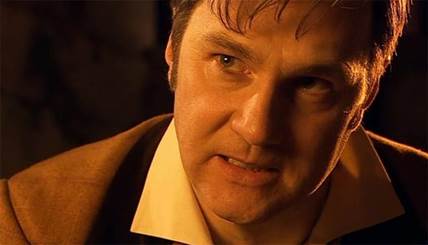
Remember this guy? From that one Christmas special? And that he was a maths tutor? No, me neither. But TARDIS Wiki has informed me otherwise! Jackson Lake, who was charismatically portrayed by David Morrissey, was in fact a mathematics teacher living in London before he got blasted with an infostamp and became convinced he was actually the Doctor.
Unfortunately, we never get to see him do any actual teaching but I’d certainly like to have been in attendance of one of his lessons. I mean, anyone who takes a hot air balloon and dubs it “Tethered Aerial Release Developed In Style” is surely worth listening to? Jackson is also a brave and heroic figure, managing to confront his identify crisis and then subsequently rescue a large number of Victorian children from slave labour in Miss Hartigan’s Cyber-conversion factory, including his own son.
I’ve also learnt a new fact from researching this: Martin Clunes was originally cast as Jackson Lake but then had to pull out. To think we could have had Lon from Snakedance telling us about algebraic equations and the Pythagorean theorem! You remember Pythagoras (c.570 BCE – c.490 BCE) from school, right? Weird fella, had his own cult. We should talk about him one day.
The Twelfth Doctor

We have to close this blog out with the most famous maths teacher in all of Doctor Who, which is the Doctor. His first series is full of mathematical undercurrents, from his chalk scrawlings in Deep Breath, to his ‘perfect proof’ that there must exist a creature that has perfect hiding skills in Listen, to even battling a lifeform that has escaped from the second dimension in Flatline. There really is a surprising amount of maths flowing about in Series 8 and if you don’t believe me then I should redirect you to here.
The Doctor seems to pick up on this at the start of Series 9, proclaiming to the locals of Essex that he has given them “some top-notch maths tuition in a fun but relevant way” in The Magician’s Apprentice. Then by Series 10, he’s lecturing to the students of St Luke’s University about pretty much anything he likes, presumably including maths, as seen in The Pilot and Oxygen. These maths skills rather come in handy when, by total coincidence, he has to fight spacesuit self-preservation algorithms (Oxygen) or identify that he’s trapped inside a computer simulation using pseudo-random numbers (Extremis).
Not content with living the life of a mathematician, the Twelfth Doctor even manages to die the death of a mathematician as well, specifically Adric’s. Both of them died at the hands of the Cybermen on board a hijacked spaceship. His companion Bill Potts also dies on that spaceship but she gets to live on as a star in the night sky, having adventures with her sentient water puddle girlfriend. Steven Moffat even goes on to repeat this trick in Joy to the World, when one-off companion Joy, played by Nicola Coughlan, gets turned into the star of Bethlehem, possibly his last ever script for Doctor Who. So whether it’s Moffat, Adric, or the Twelfth Doctor, they’re all thinking about stars in the end.
Have a gold star for making it to the very end as well. Class (2016-2016) dismissed!
Next time: Russell T Davies is back for the 3rd time, whether you like it or not.

 The Brain of Möbius
Leave a comment